How to Become a Firefighter

Damon Alexander
• 10 min read
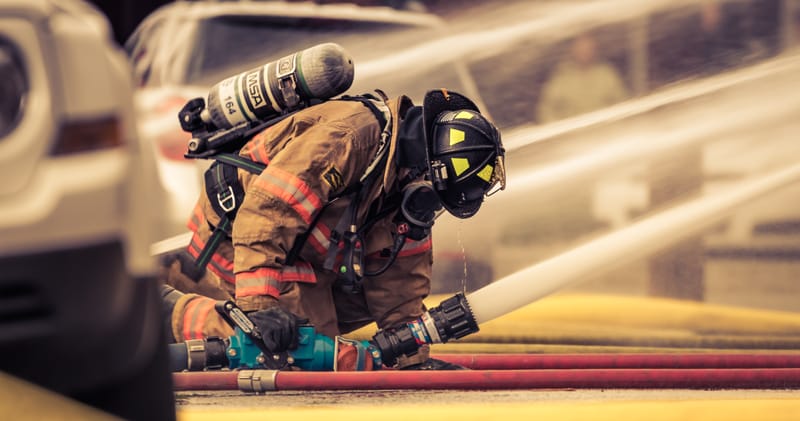
Firefighting is a job that requires courage, commitment, and selflessness to protect your community from the ravages of fire. Although it is a highly respected job, it is also dangerous, with potential for injury or death.
But despite the risks, many are drawn to the profession because of the sense of purpose and fulfillment. We’ll go over how to become a firefighter in the US and explain everything you need to know about this rewarding and in-demand career.
The Comprehensive Guide to Becoming a Firefighter: Requirements, Training, and the Path to Service
Introduction
A career as a firefighter is often called "the best job in the world," but the path to joining the ranks is highly competitive, demanding intense dedication, physical rigor, and unwavering integrity. Firefighters serve as front-line protectors, responding to structural fires, medical emergencies, hazardous material incidents, and disasters. This comprehensive guide synthesizes the requirements and steps from leading sources, detailing the essential education, physical preparation, application process, and formal training necessary to secure this vital role in public service.
Theme 1: Meeting Minimum Requirements (Eligibility & Foundational Education)
Why
The minimum requirements—age, education, and basic certifications—serve as the foundational legal and professional benchmark for entering the fire service. Because a majority of emergency calls involve medical issues, possessing emergency medical training is often a critical prerequisite, ensuring you can immediately provide life-saving care.
How
You must possess a high school diploma or GED and a valid driver’s license. Most departments set the minimum application age at 18 years old, though some larger departments may require 21. Critically, candidates are highly encouraged to, and often required to, obtain an Emergency Medical Technician (EMT) certification or, for greater competitive advantage, a Paramedic license. Furthermore, pursuing a postsecondary non-degree award or an Associate's Degree in Fire Science can significantly improve your odds of being hired by demonstrating specialized knowledge.
Example
A prospective recruit, having met the basic age requirement, could spend a year earning their EMT certification at a local community college while simultaneously completing an online Fire Science certificate program. This dual education path provides both the essential medical skills and academic knowledge of firefighting principles, making them a much stronger candidate than one with only a high school diploma.
Key Takeaway
Essential licenses and education—specifically a High School Diploma/GED, a valid Driver's License, and a highly recommended EMT certification—are the fundamental checkpoints that qualify you to begin the application process.
Theme 2: Achieving Physical and Mental Readiness
Why
Firefighting is physically grueling and psychologically taxing. Firefighters must be able to wear heavy protective gear, carry tools, rescue victims, and operate under extreme heat and stress for extended periods. The physical and psychological evaluations ensure a candidate has the stamina, strength, and mental fortitude to safely perform these duties without compromising themselves or their crew.
How
Candidates must train rigorously to pass the Candidate Physical Ability Test (CPAT). This standardized obstacle course assesses functional physical capacity through eight events, including the stair climb, hose drag, equipment carry, ladder raise and extension, forcible entry, search, rescue, and ceiling breach and pull. Additionally, you must pass a comprehensive medical examination, drug screening, and a crucial psychological evaluation to assess mental and emotional stability under stress.
Example
To train for the CPAT's Forcible Entry event (a simulated axe swing), a candidate commits to a daily regimen that includes high-intensity interval training, heavy weightlifting focused on core and back strength, and practicing swinging a sledgehammer to build explosive power and endurance.
Key Takeaway
Success requires peak physical and psychological health, demanding dedicated training to pass the rigorous CPAT and demonstrating the mental stability necessary to handle the high-stress, dangerous situations inherent to the job.
Theme 3: Navigating the Application Gauntlet (Exams & Integrity)
Why
The application process is designed to vet candidates for intelligence, judgment, integrity, and fiscal responsibility, all of which are crucial components of public trust. As a public servant, a candidate’s past actions, character, and ability to handle complex information are scrutinized to ensure they are trustworthy representatives of the community.
How
The journey begins with acing the written examination, which tests skills like math, spatial relations, problem-solving, and reading comprehension. This is followed by a thorough background investigation that checks criminal records, driving history, and even fiscal responsibility (credit score). Applicants must meticulously clean up their social media presence, as departments will scrutinize past posts for inappropriate behavior. In interviews, candidates must be prepared to answer situational questions and demonstrate ownership and rectification of any past mistakes.
Example
During the background check, a candidate who had a poor credit score proactively pulled their credit report, made an organized plan to pay down debt, and was upfront about their financial history during the interview. By showing initiative and fiscal responsibility rather than concealment, they demonstrated maturity and honesty, which are highly valued traits.
Key Takeaway
Integrity and accountability are paramount: Candidates must study extensively for the written exam and ensure their background (including social media and credit history) is spotless, prioritizing honesty and taking ownership of their past in the highly competitive interview phase.
Theme 4: Completing Formal Training and Gaining Experience
Why
Formal training is the process by which candidates transition from being applicants to skilled professionals. The fire academy provides the essential book knowledge, hands-on practical skills, and paramilitary discipline required to operate safely and cohesively as part of a fire crew.
How
Once hired, new recruits must attend a few months of intense training at a state or departmental fire academy. Recruits learn fire-prevention techniques, building codes, apparatus operation, and advanced medical procedures. After graduation, new hires must complete a mandatory probationary period under the close supervision of experienced firefighters. Prior to being hired, candidates can significantly boost their chances by becoming a volunteer firefighter or dedicating time to general community service (e.g., Habitat for Humanity or the American Red Cross) to demonstrate a commitment to public welfare.
Example
A candidate enrolls in an accredited Fire Academy program to obtain their state's Firefighter I and II certifications before applying to a municipal department. This initiative proves they are serious about the career and gives them an advanced foundation in crucial skills like hose management and ladder placement, shortening the departmental training timeline once hired.
Key Takeaway
Formal training in a fire academy is non-negotiable for employment; furthermore, gaining hands-on knowledge and demonstrating a dedication to public service through volunteering or community involvement is essential for standing out and securing a position.
How to Apply for Firefighter Jobs
If you passed through the requirements to be a firefighter, and received the proper training (including education requirements for firefighter safety), it’s time to apply for jobs. You can search for jobs through community boards. However, the most popular way to seek a position nowadays is to go online and use search engines to find the best position based on your location.
It would help if you had a firefighter resume that lists your qualifications for firefighter roles. Make sure that your resume has the correct format, font, and layout. Rocket Resume templates are an excellent way to ensure your CVs go to the right people. All Rocket Resume templates meet formatting and professional standards, seamlessly passing through Applicant Tracking Systems.
If you are not sure how or where you need to start, look at a firefighter job description for resume accuracy. You can make tweaks and adjustments based on the information you can find in the “qualifications for firefighter” segment on the post. Besides your firefighter resume, you also need a firefighter cover letter. A professional and well-polished firefighter cover letter tells your employer more about yourself. It helps them determine if you are a good fit.

Frequently Asked Questions (FAQs)
How much does a firefighter make a year?
The average firefighter salary in the USA is between $30,000 - $64,000 a year. Entry-level firefighters make between $28,000 - $50,000, while expert or senior firefighters generate in the six figures, at $100,000 and above.
How much does a firefighter make a month?
You can make between $2,500 - $5,333 a month working as a firefighter in the United States. Those salary ranges depend on whether you make $30,000 - $64,000 a year, per the national average.
A wildland firefighter salary averages at $40,000 and above in the US.
How much does a firefighter captain make?
Fire captains make up to $80,000 a year, depending on their state of residence and experience. The highest earners can earn up to $101,000 annually.
How long does it take to become a firefighter?
Becoming a professional firefighter can take several months to a few years, depending on your program and how long you need to train. For more specialized training, it will be in a few years. However, basic training takes less time.
How to become a volunteer firefighter?
To become a volunteer firefighter, you must be eighteen at least, have the education requirements for firefighter roles, clear a criminal background check, and undergo a medical exam. Some departments require you to complete a firefighter training program.
How to become a wildland firefighter?
To become a wildland firefighter, you must be 18 years old or older, have a high school diploma or equivalent, and pass a physical fitness test. Then, you must attend a training program to understand fire behavior, wildfire suppression, and safety protocols. A wildland firefighter salary is slightly higher than a regular firefighter salary and requires a special card.
Some states may require additional certifications or training, such as attending a wildland firefighter academy or possessing a Red Card, a national certification for wildland firefighters.
How to become a firefighter in Texas?
The Texas Commission on Fire Protection sets the qualifications Texans need to become firefighters. Firefighter requirements in Texas stipulate that you must be at least 18, have graduated high school with a diploma or GED, and complete a Texas Commission on Fire Protection (TCFP) training program. Finally, you must pass a medical exam, a physical agility test, and a written exam.
How old do you have to be a firefighter?
Whether you want to be a firefighter or a volunteer, you must be a minimum of 18 years old to take on this position. Because firefighting is a dangerous job, this age limit makes sense before taking on firefighter schooling.
How to become a firefighter in California?
To be a firefighter in California, you must be at the minimum 18 years old, have a high school diploma or GED, and have a valid driver’s license. You also need to pass a medical exam, a physical agility test, and a written exam.
What do you need to be a firefighter?
Besides the age requirement and high school diploma or GED, you must be physically healthy, work well within a team, communicate clearly, and tolerate a stressful and dangerous working environment. Before you apply, make sure you review the common firefighter interview questions.
What does it take to be a firefighter?
To be a firefighter, you must be over 18 and physically fit, with personal qualities like courage, the ability to work in teams, problem-solving abilities, and high adaptability.
What are the requirements to be a firefighter?
Typical requirements of being a firefighter include being at least 18, having a high school diploma or GED, passing a criminal background check, and a medical exam. Firefighters must also complete a training program covering fire behavior, emergency medical treatment, and hazardous material response. Once you get your training and have a firefighter cover letter that you can submit with your resume, ask your trainer for a firefighter letter of recommendation.
How long are firefighter shifts?
Most firefighters work a 24-hour shift, which includes sleeping, cooking, and eating at the fire station, and then they get two full days off. Depending on staffing needs and resources, some departments may also use 8-hour or 12-hour shift schedules.
What does a firefighter do?
Firefighters put out destructive fires, rescue humans and animals from dangerous situations, inspect buildings, and sometimes conduct investigations relating to arson. They also participate in public education programs and perform light maintenance when necessary.
How hard is it to become a firefighter?
Being a firefighter is not a simple job, and it comes with many risks. You must be in good physical shape and be able to handle stressful situations calmly. Most importantly, you must have a clear head to make life-altering decisions that make all the difference in a person’s life.
How old do you have to be to be a volunteer firefighter?
The age requirements to be a volunteer firefighter is to be at least 18.
What degree do you need to be a firefighter?
You need a high school diploma or its equivalent to become a firefighter. You do not need to have a college diploma or a higher degree.
How long is firefighter academy?
Fire academies vary in program duration. Some offer full-time intensive training that takes up to 16 weeks, and others offer part-time or evening programs that take several months or up to a year to finish.
What is firefighter endorsement?
A firefighter endorsement is an additional certification on a commercial driver’s license (CDL) that permits the holder to operate certain types of commercial vehicles used in firefighting, such as fire trucks and water tenders. This endorsement requires additional training and testing beyond the standard CDL requirements and is necessary for driving fire trucks.
Why become a firefighter?
Firefighters have rewarding careers that allow them to help others, serve the community, and positively impact people’s lives. Your community respects your profession, and you can work in multiple settings beyond a traditional fire station. Also, firefighters receive competitive salaries and benefits, and the job provides career advancement and personal growth opportunities.
How many days does a firefighter work?
The 24/48 schedule is a typical shift schedule used by many fire departments. It requires firefighters to work 24 hours straight and then have 48 hours off duty. This pattern ends up resulting in an average of 10 workdays per month.
Conclusion
Becoming a firefighter is a multi-step journey defined by rigor and dedication. It requires a solid educational foundation (HS/GED and often EMT certification), peak physical conditioning (passing the CPAT), impeccable integrity during the extensive application and background checks, and the successful completion of a departmental fire academy. This challenging but rewarding career demands a constant commitment to learning and serving the community.
Are you ready to embark on an enriching career as a firefighter? Start now with Rocket Resume.
Related Rocket Resume Resources