Pipe Welder Career Path & Salary Guide

Damon Alexander
• 7 min read
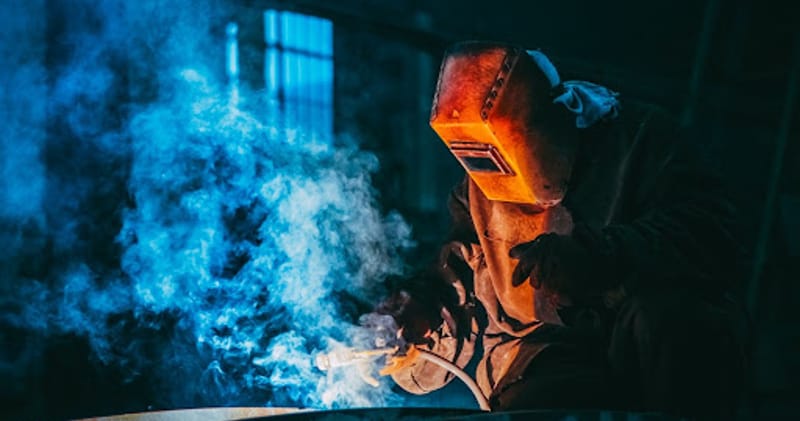
Welding is an enjoyable trade that lets you create and repair items to your heart’s content. This job is exciting and never dull, figuratively and literally. Suppose you like making things with your hands and problem-solving. In that case, welding gives you the perfect opportunity to perform the functions you love. Moreover, welders have high earning potential and opportunities to progress.
If you want to become a welder and have questions such as how much the average welder salary is, you’re in the right place. We’ll go over the specifics of this position, the average welder salary, and how you can start on your welding journey using a proper resume.
The High-Pressure World of Pipe Welding: Path, Process, and Pay
Introduction
Pipe welding is a highly specialized and essential trade responsible for constructing and maintaining the critical infrastructure that powers modern life—from oil and gas pipelines and nuclear power plants to municipal water systems and commercial HVAC systems. This comprehensive article explores the three main facets of this demanding career: the technical responsibilities and methods, the stringent path to certification and journeyman status, and the physical realities, compensation, and strong job outlook that define the profession.
Theme 1: The Essential Role and Techniques of a Pipe Welder
Why: The Importance of Pipe Integrity
The primary goal of a pipe welder is to create a seamless, pressure-resistant, and leak-proof seal that can safely transport liquids, gases, or chemicals, often under extreme temperatures or pressure. Because failure in a pipe system can lead to catastrophic damage, environmental disaster, or safety hazards, precision and adherence to strict codes (like ASME or API) are paramount. The welder is the final guarantor of the system’s structural integrity.
How: Mastering the Arc and Position
Pipe welders execute their role by first reading complex blueprints and specifications to determine the exact requirements of the joint. They then cut, clean, and prepare the pipes to ensure precise alignment. The actual welding process involves applying several passes to the joint:
- Root Pass: The critical first weld that fuses the inside edges of the pipe, requiring deep penetration and perfect control.
- Hot Pass: A second pass applied immediately to melt out any trapped impurities or slag from the root.
- Fill Pass: Multiple passes used to build up the thickness of the weld within the groove.
- Cap Pass: The final, visible layer, designed for appearance and shape, ensuring the joint meets tolerance requirements.
Pipe welders must be proficient in various processes, most notably Shielded Metal Arc Welding (SMAW or Stick) for its portability and suitability for remote locations, and Gas Tungsten Arc Welding (GTAW or TIG) for high-precision, critical welds on materials like stainless steel.
Example: The Challenging 6G Position
The most stringent test of a pipe welder's skill is the 6G welding position. In this scenario, the pipe is fixed and inclined at a 45-degree angle, forcing the welder to maneuver around the joint in flat, vertical, and overhead positions—all while fighting gravity's effect on the molten metal. Passing a 6G certification test often qualifies a welder for almost any position they will encounter in the field.
Key Takeaway: Precision and Versatility
Pipe welding demands technical precision across multiple welding processes (SMAW, TIG, MIG) and the ability to operate successfully in complex, fixed positions like the 6G. The welder’s craft is fundamental to system safety and reliability.
Theme 2: The Structured Path to Becoming a Certified Journeyman
Why: The Mark of a Master Craftsman
The title of Journeyman Pipe Welder is a designation of mastery and competence, indicating that the individual has completed the comprehensive training necessary to work unsupervised and adhere to strict industry codes. Employers prefer journeymen because their training minimizes risk and ensures compliance with often legally mandated safety and quality protocols.
How: Education, Apprenticeship, and Code Certification
The typical path to becoming a Journeyman Pipe Welder is highly structured:
- Foundational Education: Obtain a high school diploma or GED, followed by a certificate or diploma from a technical school or community college welding program (often lasting 7 to 15 months).
- Apprenticeship: Enroll in a structured, paid apprenticeship program, typically sponsored by a union or major employer, which can last up to five years. Apprentices gain essential on-the-job experience under the direct supervision of a skilled Journeyman.
- Certification: Pass rigorous certification exams. While the American Welding Society (AWS) Certified Welder (CW) is a common baseline, specialized pipe welding roles often require certification to specific codes:
- ASME Section IX: Required for pressure vessels and high-pressure piping (e.g., power plants, refineries).
- API 1104: Required for welding pipelines and related facilities (e.g., oil and gas).
Example: Earning Code Credentials
A newly certified welder seeks a job in a natural gas facility. The employer requires the welder to pass a performance test adhering to ASME Section IX standards for joining two carbon steel pipes using both TIG for the root pass and Stick for the fill/cap passes in the fixed 6G position. Passing this test proves their ability to meet the stringent requirements necessary for high-stakes pressure systems.
Key Takeaway: Commitment to the Craft
Becoming a Journeyman involves extensive commitment: formal education followed by a multi-year apprenticeship. Success is validated through specialized code certifications (ASME, API) that prove the welder's competency in high-pressure environments.
Theme 3: The Reality of the Job: Physical Demands, Safety, and Outlook
Why: High Pay for High Stakes and High Demand
Pipe welders, especially those specialized in pipelines or high-pressure systems, command competitive salaries due to the required skill level, the often dangerous or remote working conditions, and the high demand for specialized certifications. The pool of qualified journeymen is smaller than the need for their work, ensuring strong job security.
How: Working in Difficult Environments
The job is physically demanding. Welders must maintain physical strength and stamina to work for long hours in strenuous conditions, sometimes welding in awkward or confined positions (like underground or at height). Work environments vary drastically, ranging from extreme heat on a Texas pipeline to freezing cold in a mountain construction zone.
Compensation, particularly for cross-country pipeline welders, can involve a "split check" system designed to maximize tax efficiency and cover living costs, often including:
- Arm Pay: The hourly wage for welding work.
- Truck Pay: A flat rate for the use of the welder’s specialized truck and tools.
- Per Diem: A daily allowance for living expenses while traveling, often untaxed.
Example: Compensation and Specialization
While the median annual wage for general welders in the U.S. is around $51,000, specialized Pipe Welders typically earn annual salaries in the range of $67,000 to $75,000. Highly experienced Journeymen or pipeline welders working long hours in remote, high-demand areas can often earn over $100,000 annually, demonstrating the substantial financial reward tied directly to specialization and willingness to travel.
Key Takeaway: Rewarding, Demanding Career
The pipe welding career is defined by its physical difficulty and diverse, often rugged environments, but it offers high job security, excellent earning potential, and a significant salary advantage over general welding, particularly for those with advanced certifications and specialization.
Do Welders Need to Take Courses or Certifications?
Although it is not mandatory for you to take courses or certifications in welding, learning the basics from professionals is a safer bet. You’ll understand the fundamental roles welders take on, learn about safety, and have some experience under your belt to present to prospective employers.
Remember that for beginners, certifications are not mandatory. However, for more technical jobs, including working with or overseeing people, you may need to seek specialized certifications. Some examples of certifications include:
- Certified Welder (CW)
- Certified Welding Instructor (CWI)
- Certified Associate Welding Inspector (CAWI)
- Senior Certified Welding Inspector (SCWI)
- Certified Welding Educator (CWE)
- Certified Resistance Welding Technician (CRWT)
- Certified Radiographic Interpreter (CRI)
With so many options and opportunities to branch into within this industry, having more than one certification elevates your chances of getting a good job with an excellent welder salary.
How Much Does a Welder Make?
Based on all the specializations available, you may ask yourself, “how much does a welder make?” The good news is that this career and job have a high earning potential.
The average welder salary in the US is $42,950 per year. This salary amounts to roughly $20.00 per hour. The states with the highest welder salaries are Alaska ($50,930), Kentucky ($51,330), and Maryland, at the top, sits at $56,330.
The average welder salary for a government employee is $69,325 according to Federal Pay.
The welding industry is growing yearly, and the job outlook is positive, with a 6% increase in job demand in the next decade and a growth projection of 8%. Now is the perfect time to start if you want to get into the welding industry.
How Can One Apply to Welding Positions?
Now that you know how to start a successful welding career, the next step is to apply for the certifications and get the training you need if you don’t have experience. Once you clear that hurdle, it’s time to build your resume and apply to jobs online.
One of the hassles of applying online is ensuring that your resume gets to the hands of your hiring manager. Unfortunately, many people format their resumes in a way that doesn’t pass Applicant Tracking Systems. The solution to this issue is to format a CV with Rocket Resume.
At Rocket Resume, building a CV is a straightforward and enjoyable process. By inputting the information for the prompts and questions and choosing the best template for your job, you’ll spend less time and effort formatting and more time applying to jobs. With intuitive tools and an easy-to-use interface, you’ll have a ready resume in minutes that passes through ATS systems without hassle.
Are you ready to start a successful and lucrative welding career with excellent earning potential? Apply using a CV from Rocket Resume today and receive a discount when you create your account.
Related Rocket Resume Resources